
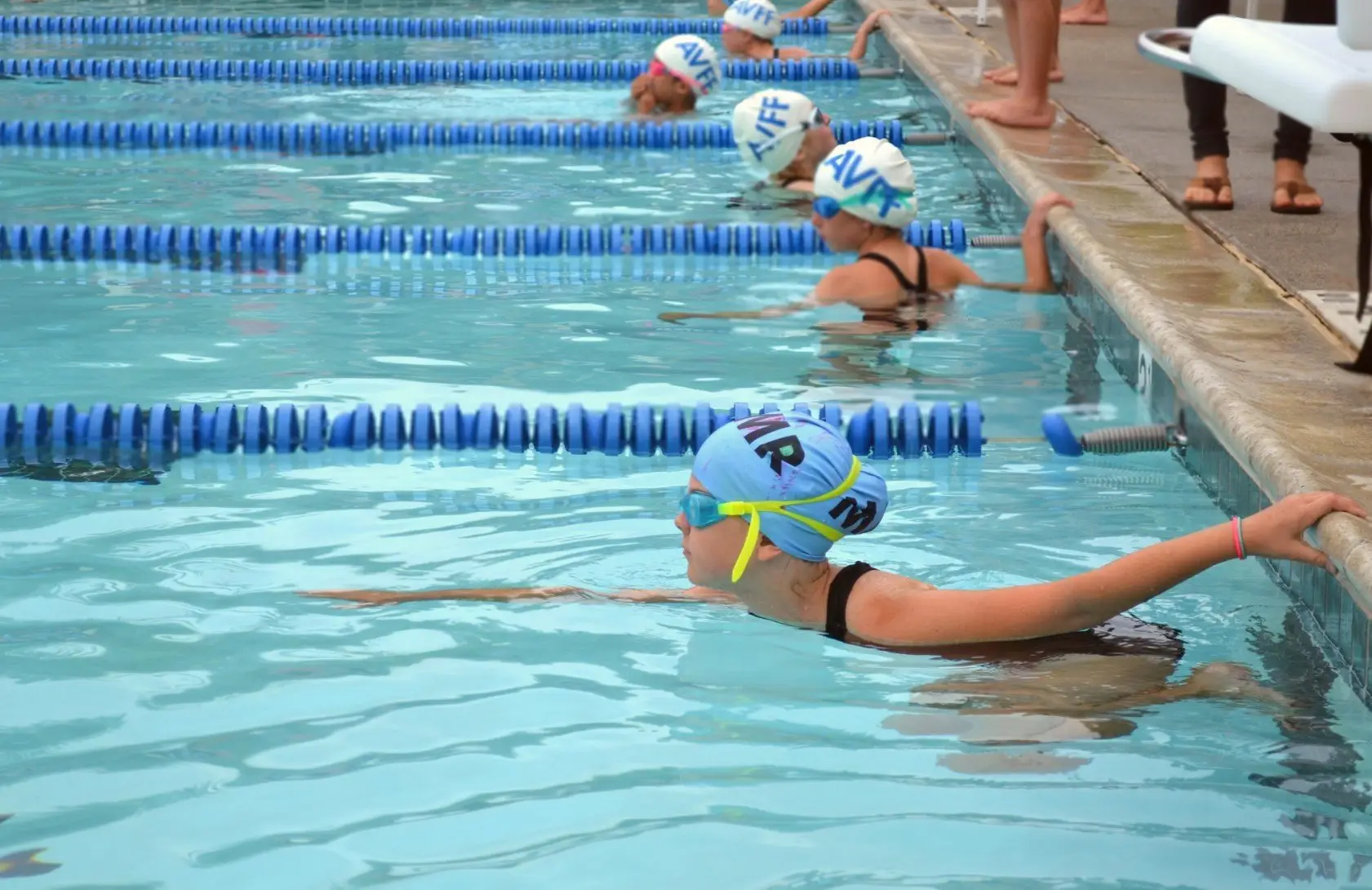
One of the most frequent mistakes swimmers make is keeping their head too high. It’s human nature to want to look ahead, but in the pool, this creates drag. When your eyes are above the waterline, your neck and hips drop, slowing you down and disrupting your body alignment.
Keep your gaze downward. Most pools have a line at the bottom use it as your visual guide. With time and practice, maintaining proper head position will become second nature and your speed and efficiency will noticeably improve.
Many swimmers struggle with when to take a breath. Instinct often tells us to inhale when the arm exits the water, but that motion can send water splashing into your mouth or nose. Poor breath timing can also interrupt your stroke rhythm and tire you out faster.
Breathe as your hand enters the water, not when it exits. This small change helps maintain your body’s natural flow through the stroke. Focus on controlled, rhythmic breathing; practicing a few laps dedicated solely to timing will make a big difference.
When fatigue sets in, swimmers tend to shorten their strokes. Instead of fully extending their arms from head to hip, they pull out of the water too soon. This reduces the distance covered per stroke and actually requires more effort to move the same distance.
Focus on full extension and follow-through. Count your strokes per lap; if the number starts increasing, you may be cutting your stroke short. Slowing down and emphasizing long, powerful strokes will help retrain your muscle memory.
Many swimmers don’t realize how crucial body alignment is. Poor posture like arching the back or sinking the hips creates extra resistance and wastes energy.
Think of your body as a straight, streamlined line from fingertips to toes. Engage your core muscles and keep your hips high in the water. The more level your body, the smoother and faster you’ll glide.
Some swimmers rely almost entirely on their arms, forgetting that the legs play a major role in propulsion and stability. Weak or inconsistent kicking can throw off balance and speed.
Focus on small, steady kicks coming from your hips not your knees. Practice flutter kicks or use a kickboard during warm-ups to strengthen your legs and improve coordination between your upper and lower body.