

Recently, I had a lesson with a first-time swimmer who had a near-drowning experience a few months prior. From the moment he and his mom approached the facility, I knew this lesson would be a challenge. He resisted every step from the car to the gate.
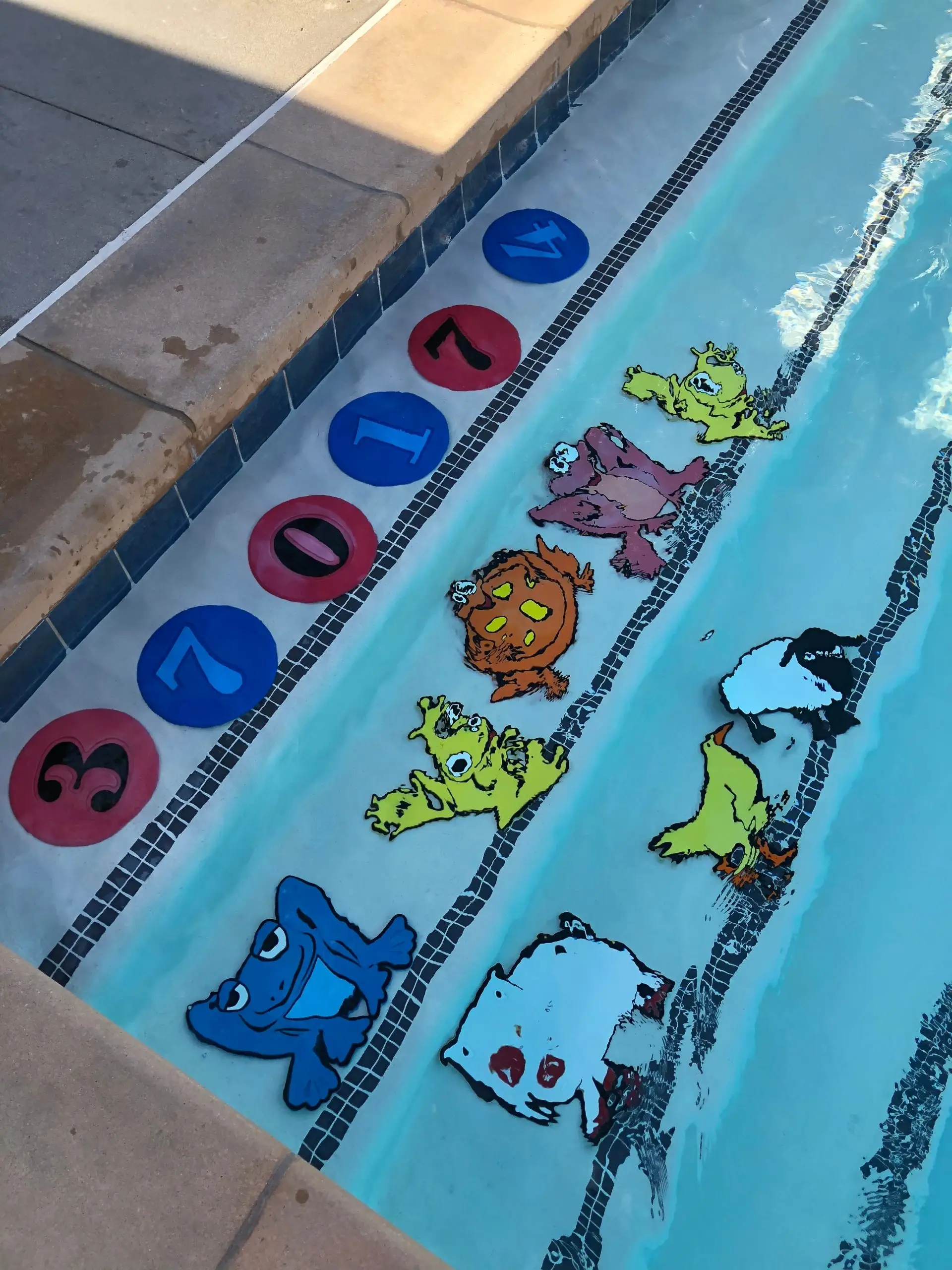
To ease his fear, I placed a variety of animal toys along the pool steps, creating the illusion that the water was home to fun and familiar things. Instantly, curiosity began to replace some of his fear. Once in the water, I encouraged him to choose a toy to bring with him, giving him a sense of control and security.
Next, I introduced a watering can to familiarize him with water on his face and head. We started with his shoulders, then ears, and finally the head. By the time it was my turn to have water poured on me, he was giggling and enjoying the process.
Venturing away from the steps was the most challenging part. To encourage exploration, I turned parts of the pool into imaginative play: the gutter became a “cave” with “fishies,” the lane lines became “donuts” to take a “big bite,” and the wall became a “brown mountain” to climb and jump from. Using playful imagination, the pool became less intimidating. Within two months, this same child was confidently gliding with his face in the water, back floating, and having a blast!
To help timid swimmers, I use several key strategies. Placing toys at the bottom or around the swimming area makes the water feel inviting and less intimidating, while allowing the child to bring a comfort toy from home or choose one from the lesson provides security and can also serve as an incentive—for example, “If we do three back floats, you can dive for your toy.” Gradually introducing water on and around the face using a watering can helps children become comfortable, and they often find pouring water on the instructor hilarious, which reduces fear when it’s their turn. I turn the pool into a playful world by giving imaginative names to pool features, such as calling the gutter a “cave” with “fishies” or the lane lines “donuts,” encouraging exploration. Constant affirmations and positive reinforcement help children feel accomplished, especially after facing fears. Being empathetic and patient is essential, progressing at the child’s pace and acknowledging their concerns while gently encouraging them. Using exaggerated gestures makes instructions easier and less intimidating, and offering numerical choices—like “Should we do four back floats or five back floats?” helps avoid outright refusal. Singing can help younger children relax, particularly during back floats, and maintaining a positive attitude through smiling, laughing, and demonstrating comfort in the water helps them feel safe and confident.
By implementing these tips, instructors can build confidence in timid swimmers and transform their pool experience into one that’s fun, magical, and empowering. Always put yourself in their shoes and let imagination guide the lesson!