

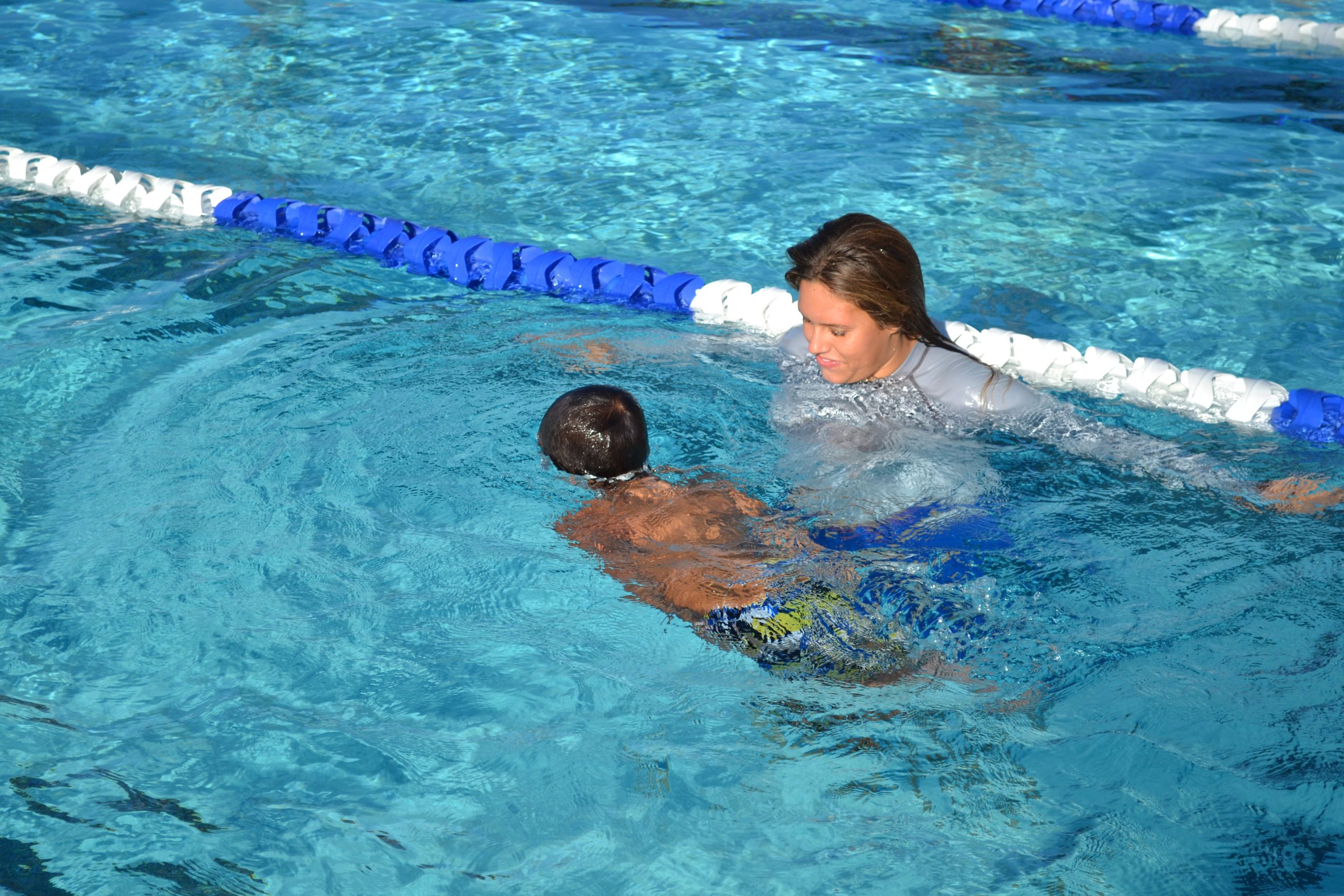
The freestyle stroke, or front crawl, is typically the first style taught in swim lessons. It’s also the most common stroke in competitions. While it may appear simple, small adjustments can make a huge difference in your speed and efficiency.
Head Placement:
Beginners often lift their head vertically out of the water to breathe; but this increases drag and slows you down. Instead, rotate your head to the side while keeping one eye in the water and one out. This allows for a smoother, more efficient breath without losing momentum.
Body Rotation:
Your hips play a major role in an effective freestyle stroke. Each stroke should be accompanied by a gentle rotation of your body from the hips through the shoulders. This rotation helps reduce strain on your arms and shoulders while allowing you to glide more easily through the water.
Kicking Correctly:
Many swimmers focus on their arms and neglect their kick, but your legs are just as important. A strong yet relaxed flutter kick adds power and balance to your stroke. Avoid kicking too hard (which wastes energy) or too lightly (which causes drag). Depending on your goal, you can adjust between a two-beat or six-beat kick rhythm for the best results.
After mastering freestyle, most swimmers move on to the breaststroke; a stroke that demands timing, control, and coordination. Once you’re familiar with the motion, focus on refining these key aspects:
Stay Horizontal:
Your shoulders, hips, and legs should stay aligned with a slight downward slope to keep your kick underwater. Maintaining this position improves body balance, reduces resistance, and prevents unnecessary strain.
Arm Movement:
In breaststroke, your arms provide rhythm and direction. Keep your hands close together as they sweep outward and then pull back toward your chest. Avoid making your arm pull too wide; tighter movements help create smoother propulsion for your legs.
Timing:
The secret to a powerful breaststroke is synchronization. As your arms recover forward, your legs should be finishing their kick. Alternating between the pull and kick phases ensures a continuous, energy-efficient motion that keeps you gliding smoothly.
Once you’re comfortable with freestyle and breaststroke, try exploring more advanced strokes such as backstroke or butterfly. Remember, learning to swim is not a race. Focus on perfecting your form before your speed to avoid fatigue and injuries.
If you’re looking to improve your technique or gain more confidence in the water, sign up for a swim lesson with one of our certified instructors. Once you’ve mastered the basics, you might even consider joining one of our swim teams to take your skills to the next level.
For more information on proper swimming techniques or to get started, contact us or visit our website today!