

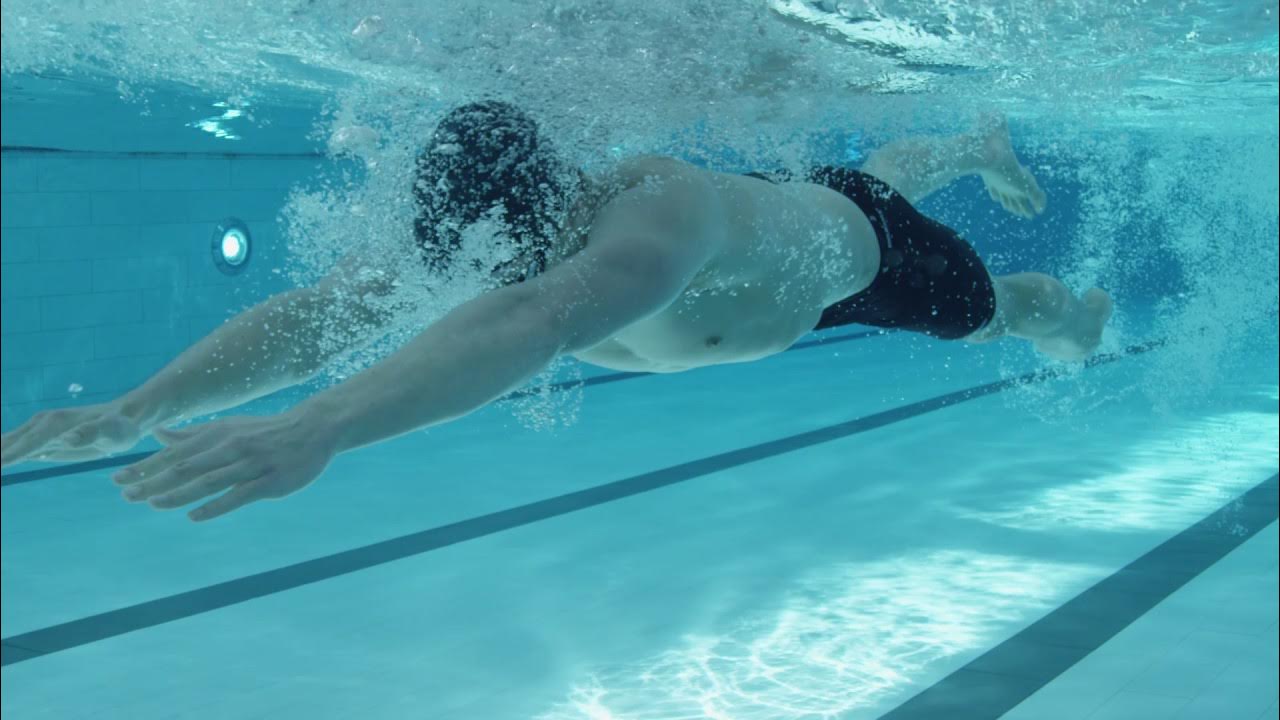
Many swimmers, young and old, swim the breaststroke with their head above water. This often happens due to discomfort putting the face in the water or the perception that it uses less energy. However, this technique can strain the neck and upper spine unnecessarily.
Imagine walking twenty minutes with your face tilted straight up; your neck would ache. Swimming the breaststroke with your head above water creates a similar strain.
To swim the breaststroke safely and efficiently, it is important to keep your spine straight from head to tailbone. Your head should be positioned slightly forward with a mild chin tuck to maintain a straight neck, while your abdominal muscles are engaged to support your back. Keeping your hips near the water’s surface helps prevent arching in the lower back. When breathing, lift your head only during the pull phase, inhale through your mouth, and keep your shoulders relaxed. During arm recovery, extend your head forward into the water, keeping your ears in line with your biceps, and exhale slowly to maintain proper rhythm and alignment.
Developing proper technique takes time and consistent practice. Following these guidelines helps your child avoid neck and back strain while improving efficiency in the water.
The swim instructors at Premier Aquatic Services are trained to work with swimmers of all ages and abilities. Proper guidance ensures your child develops safe and effective swimming techniques.
Visit our Swim School to learn more. For additional water safety tips, follow us on Facebook.