

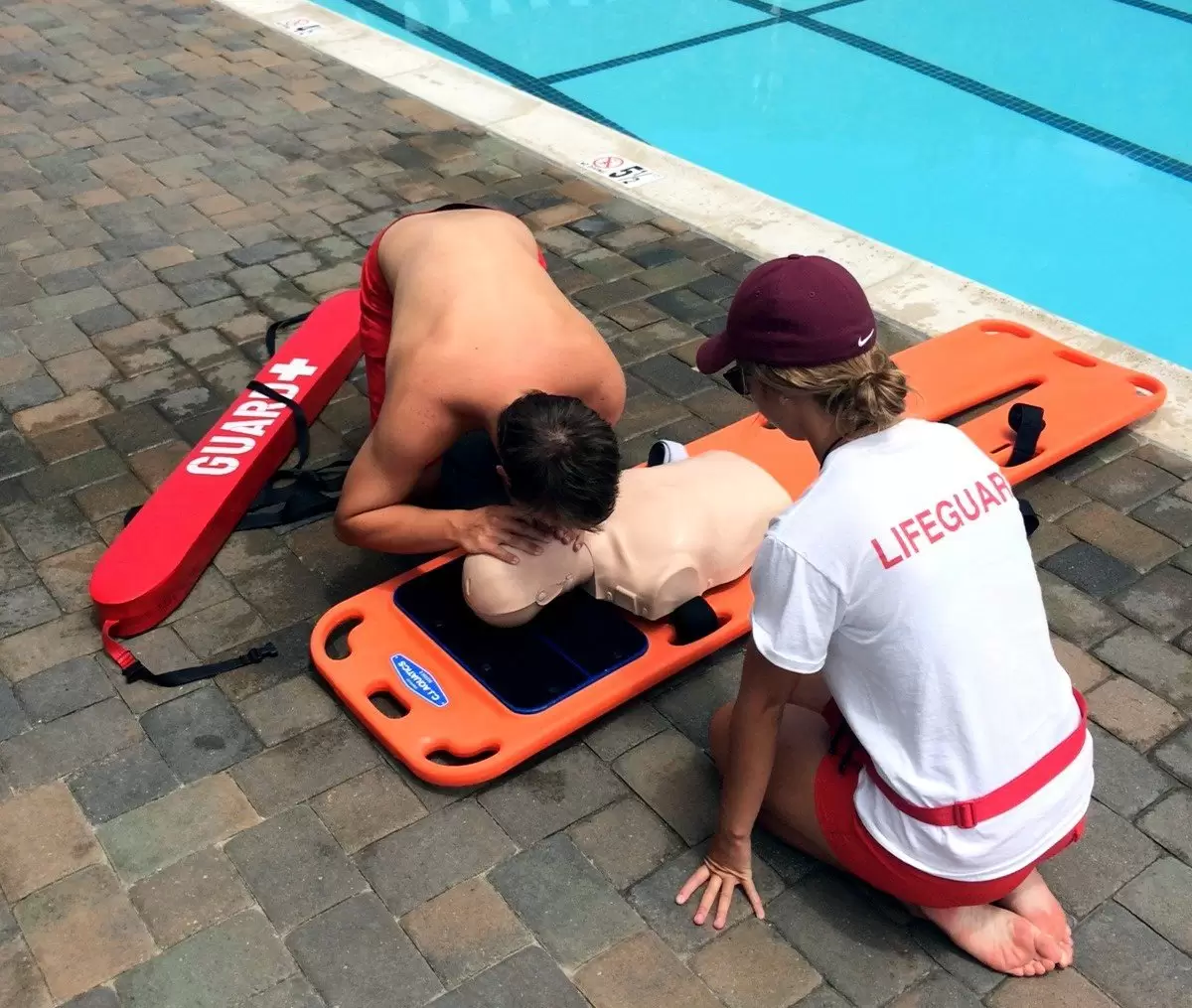
Lifeguard certification teaches us everything we need to know: how to recognize distress, perform rescues, and administer life-saving care. But when you’re actually faced with someone drowning, instinct and training merge in a way that no classroom can replicate. Saving someone’s life not only tests your skills; it gives you a powerful reality check about the true dangers of the water.
I’ll never forget the day I saved a woman’s life. She was a regular at the pool in a local retirement community; a confident swimmer who came almost every day. Everything seemed normal until it wasn’t. I noticed her quietly dip under the water without resurfacing. There were no dramatic splashes or cries for help like in the movies, just silence.
One of the biggest misconceptions about drowning is that it’s loud and obvious. In reality, it’s often quiet, fast, and easy to miss. Even experienced swimmers can find themselves in trouble. This experience opened my eyes to how critical constant vigilance is, because emergencies don’t always look like emergencies
It’s easy for lifeguards to think their job is repetitive; hours of watching people enjoy themselves in the water. But those quiet hours are exactly what make lifeguarding so meaningful. When that rare, critical moment comes, we have the ability, and responsibility; to act. Whether watching over children, teens, or retirees, the feeling is the same: we have the power to save lives.
This is where Premier Aquatics truly stands out. Their ongoing, on-site training programs ensure every guard is ready for any situation. Weekly in-service sessions reinforce essential skills, build confidence, and prepare us for the unexpected. When the time came for me to act, I knew exactly what to do, because I was trained the Premier way.