

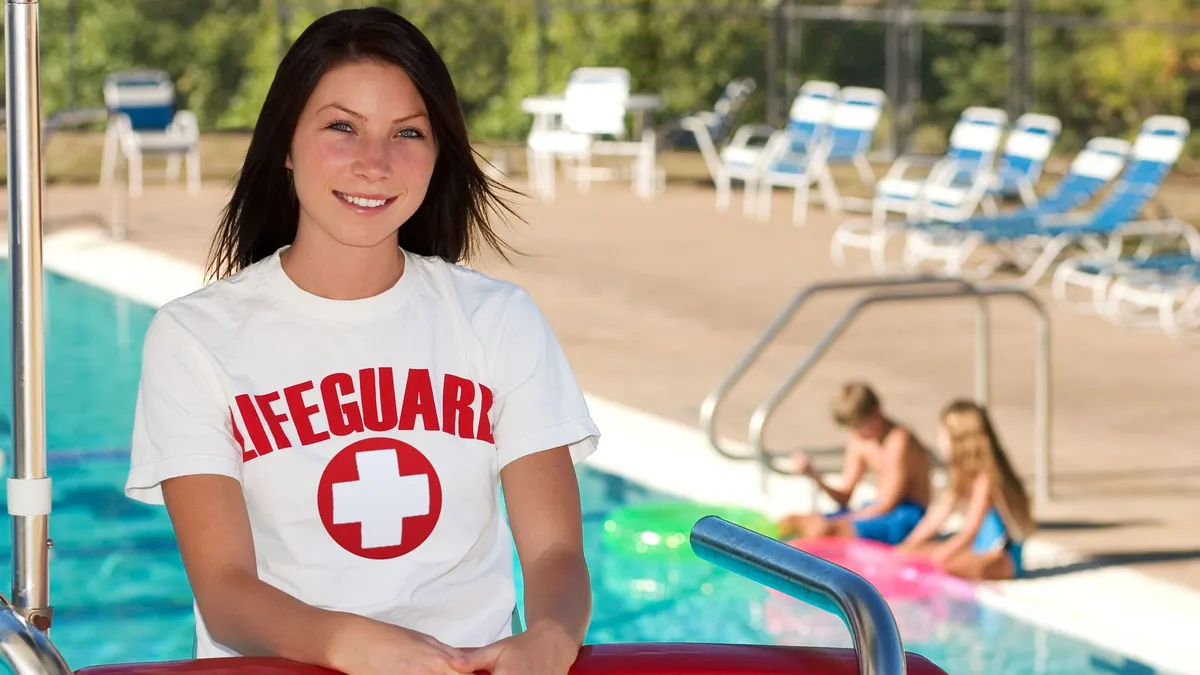
While some local pools employ pool monitors to watch for hazards such as broken glass or unsafe behavior, their role is limited. These monitors often have minimal or no formal first aid training, are not required to enter the water, and are not responsible for performing rescues.
Lifeguards, on the other hand, are highly trained professionals responsible for preventing, identifying, and responding to emergencies in and around the water.
Lifeguards do far more than simply sit and observe. Their work involves continuously evaluating water conditions, assessing each swimmer’s capabilities, identifying potential risks before they escalate, and enforcing safety guidelines to ensure everyone’s well-being.
Their ultimate mission is simple: Prevent injury and protect every swimmer.
Whether at a community pool or the ocean, drowning can happen quickly—even to confident swimmers. Lifeguards are trained to perform swift and effective water rescues, respond to swimmers experiencing medical emergencies, and manage unpredictable and rapidly changing conditions.
Their ability to intervene immediately can be the difference between life and death.
Lifeguards are often the first responders during emergencies, including cuts and falls, heat-related illnesses, cardiac events, and drowning incidents.
Many lifeguards receive advanced EMS training, equipping them to deliver CPR, use AEDs, and administer lifesaving first aid until paramedics arrive.
Our lifeguards also focus on preventing accidents before they happen by identifying facility hazards, maintaining order on the pool deck, monitoring equipment and safety zones, and educating visitors about safe practices.
Their presence helps ensure a safe and enjoyable environment for everyone.
Despite spending much of their day near the water, lifeguards also devote time to classroom-based emergency preparedness training, skill refreshers and scenario practice, as well as regular in-service training to maintain their certifications.
This continual learning ensures they are always prepared for any emergency.
At Premier Aquatic Services, your family’s safety comes first. Our lifeguards undergo extensive training, meeting and exceeding industry standards. We hire only the most dedicated professionals to protect our facilities and community pools.